4.9 | 4,500+ Reviews

Indianapolis (317) 342-4995

Bloomington (812) 902-1177

The Ultimate Guide to Smart Garage Door Openers (2026 Edition): Security, Automation, and Integration

Most homeowners don’t think much about their garage door opener until they forget to close it or wonder if it opened while they were away. That small moment of uncertainty is exactly where smart garage door openers have changed the game.

Today’s systems go beyond basic remote access. A smart garage door opener connects your garage to your broader smart home, giving you better visibility, more control, and the ability to automate everyday routines. Whether you’re upgrading an older opener or building out a connected home, understanding how these systems work helps you get the most out of the investment.

What Is a Smart Garage Door Opener?

A smart garage door opener allows you to monitor and control your garage door through a mobile app, voice assistant, or home automation platform. Instead of relying on a handheld remote or wall button alone, you can open or close your garage door from virtually anywhere.

Most systems include:

  • Real-time door status monitoring
  • Remote open and close functionality
  • Activity alerts and notifications
  • Integration with smart home platforms

Some models are built with smart features from the start, while others use add-on controllers that connect to your existing opener.

How Do Smart Garage Door Openers Work?

At a basic level, smart garage door openers connect your existing garage door system to your home’s Wi-Fi network. A controller, either built into the opener or added as an accessory, communicates with your phone or smart home platform through an app.

Most systems rely on a combination of sensors and cloud-based communication. A door sensor tracks whether the door is open or closed, while the controller sends and receives commands through your internet connection. When you tap a button in the app or use a voice command, that signal is sent to the opener, which activates the motor just like a traditional wall switch.

From there, integration takes things further. Once connected, your garage door can interact with other smart devices in your home, allowing for automation, alerts, and more advanced control.

Why More Homeowners Are Upgrading Their Garage Door Openers in 2026

Smart garage door openers have become more common as homeowners look for ways to simplify daily routines and improve home security. In 2026, the biggest shift in garage door openers is a combination of convenience and integration.

Instead of operating as a standalone device, your garage door can now work alongside lighting, security systems, and thermostats. That broader connectivity is what makes smart home garage door automation routines so useful. For example, your garage door can automatically close when you leave the house, trigger exterior lights when it opens at night, or send alerts if it’s left open longer than expected.

Questions to Ask Before Installing a Smart Garage Door Opener

Not every system is the right fit for every home. Choosing the right smart garage door opener depends on your existing equipment, your preferred smart home platform, and how you plan to use automation features.

Before scheduling smart garage door installation, it’s worth considering the following questions.

  • Is your current opener compatible with a smart controller?
  • What level of automation are you hoping to implement?
  • How reliable is the Wi-Fi in the garage area? 
  • Will my smart home platform connect to a garage door opener?

A system that integrates smoothly with your existing setup will be easier to use and more reliable over time.

How to Find the Right Smart Garage Door Opener for Your Home: 6 Key Features to Look For

Not all smart garage door openers offer the same level of performance or compatibility. Some are designed for simple remote access, while others are built to fully integrate into a connected home. If you’re comparing options, keep an eye out for these six features.

1. Compatibility

Compatibility should come first. Look for systems that work with your preferred platform, whether that’s Apple HomeKit, Google Home, or Alexa’s garage door integration. Many homeowners are also starting to prioritize Matter-compatible garage door openers in 2026, since they’re designed to work across multiple ecosystems without extra setup.

2. Enhanced Security Mechanisms

Security features are just as important. Systems with encrypted communication, multi-user access controls, and real-time alerts offer better protection and more visibility into how your garage is being used.

3. Ease of Use

You’ll also want to consider ease of use. A well-designed app, simple setup process, and reliable connection make a noticeable difference in day-to-day use. If the system is difficult to navigate or frequently disconnects, it quickly becomes more frustrating than helpful.

4. Automation and Smart Home Integration

The real value of a smart garage door opener shows up in how it fits into your routine. Instead of thinking about opening and closing the door, automation handles it in the background.

Smart home garage door automation routines can be as simple as closing the door when you leave or as connected as tying into full home and away settings. Some systems also support IFTTT garage door applets and triggers, allowing you to create more customized rules based on location, time of day, or activity.

Even a small amount of automation can make daily use more consistent and eliminate the need to double-check whether the door was closed.

5. Lighting Integration

Some smart systems can trigger lighting when the garage door opens or closes. This helps improve visibility when you arrive home at night or leave early in the morning, making the space safer and easier to navigate.

6. Backup Power

Backup power is another feature worth considering. If your home loses power, a battery backup allows the garage door opener to continue operating. This can be especially important during storms or outages when access to your garage is still needed.

So, Is a Smart Garage Door Opener Worth It?

For many homeowners, the value comes down to visibility and control. Being able to check your garage door status from anywhere, receive alerts, and automate daily tasks removes a layer of uncertainty that traditional systems can’t address.

While the technology adds convenience, it also supports better home security and more efficient day-to-day routines. As smart home systems continue to evolve, the garage door is becoming a more connected and functional part of the home.

If you’re considering an upgrade, understanding how these systems work and how they integrate with your existing setup can help you choose a solution that fits your needs both now and in the future. Our team at Garage Door Doctor can help, too. Contact us today to schedule a consultation.

How to Choose the Best Garage Door Opener for Your Home

A garage door opener might seem like a simple purchase, but the right choice can transform your daily routine. The perfect opener provides smooth operation, enhanced security, and years of reliable service. With so many options available—from ultra-quiet belt drives to smart-enabled models—finding the ideal match for your Indianapolis or Bloomington home requires careful consideration.

The garage door opener market has undergone significant evolution, offering homeowners more features and customization options than ever before. Whether you’re replacing an old unit or installing your first automatic opener, understanding your options will help you make a confident decision that fits your lifestyle and budget.

Key Factors to Consider When Choosing a Garage Door Opener

Drive Type: The Foundation of Performance

Chain Drive systems offer proven durability at an affordable price point. These workhorses use a metal chain to lift and lower your door, making them ideal for detached garages where noise isn’t a primary concern. They’re particularly well-suited for heavy doors and can handle frequent use.

Belt Drive openers use a rubber belt instead of a chain, delivering whisper-quiet operation. If your garage is attached to your home or you have bedrooms above the garage, a belt drive system will minimize disruption to your household’s peace and quiet.

Screw Drive mechanisms require minimal maintenance and work well in moderate climates like those found throughout Indiana. These systems use a threaded steel rod to move the door and offer a good balance of performance and simplicity.

Direct Drive or Jackshaft systems represent the premium tier, featuring ultra-quiet operation and space-saving designs. These are perfect for homes with high ceilings or luxury properties where aesthetics and performance matter most.

Horsepower and Lifting Power

Matching your opener’s horsepower to your door’s weight and size ensures optimal performance. Most residential garage doors work well with ½ HP to 1¼ HP motors. Single-car doors typically need ½ HP, while double-car doors require ¾ HP or more.

Heavy wooden doors, insulated doors, or doors with decorative hardware may need additional power. An underpowered opener will struggle and wear out prematurely, while an overpowered unit provides smooth operation and longevity.

Smart Features and Connectivity

Modern garage door openers can integrate seamlessly with your smartphone and home automation systems. Wi-Fi-enabled models allow you to:

  • Monitor and control your door remotely
  • Receive alerts when the door opens or closes
  • Set schedules for automatic operation
  • Grant temporary access to delivery services

These features add convenience and security, especially valuable for busy families in Indianapolis and Bloomington who want to stay connected to their homes.

Battery Backup and Security Features

Power outages shouldn’t leave you stranded. Battery backup systems ensure your opener continues working during electrical failures. Modern security features include rolling code technology, which changes the access code each time you use your remote, and auto-lock functions that secure your door after closing.

Noise Considerations

If your garage shares walls with living spaces, prioritize quiet operation. Belt drive and direct drive systems operate at significantly lower noise levels than chain drives, making them ideal for attached garages or homes where family members have different schedules.

Professional Installation vs. DIY

While some homeowners consider DIY installation, professional installation offers significant advantages. Garage door systems involve heavy components, electrical connections, and precise adjustments that require experience and specialized tools.

Garage Door Doctor’s professional installation ensures your opener is properly calibrated, safely installed, and optimized for your specific door and usage patterns. Professional installation also preserves your warranty coverage and provides peace of mind that the job is done right.

Why Choose Garage Door Doctor for Your Indianapolis or Bloomington Home

Garage Door Doctor brings years of local expertise to Indianapolis and Bloomington homeowners. Our team understands the unique challenges Indiana weather presents and can recommend openers that perform reliably year-round. We provide personalized consultations, taking into account your garage’s layout, your family’s needs, and your budget constraints.

Our professional installation service includes complete setup, testing, and customer education, ensuring you’re comfortable operating your new system from day one.

Take the Next Step Toward Better Garage Door Performance

Choosing the right garage door opener doesn’t have to be overwhelming. The experts at Garage Door Doctor are ready to help you find the perfect solution for your home. We’ll assess your current setup, discuss your priorities, and recommend options that fit your needs and budget.

Ready to upgrade your garage door opener? Contact Garage Door Doctor today to schedule your free consultation. Visit us online or call to discuss your project with our experienced team.

Types of Garage Door Openers

Types of Garage Door Openers: Belt Drive, Chain Drive, and Direct Drive

Your garage door opener is crucial to your home’s security and convenience. With multiple options available, choosing the right garage door opener for your home can feel overwhelming.

The types of garage door openers differ in noise levels, durability, and maintenance needs, making it essential to understand which one best fits your lifestyle. In this guide, we’ll explain the three most common garage door opener types to help you make an informed decision.

Belt Drive Garage Door Openers: Smooth and Quiet

A belt drive garage opener uses a rubber belt instead of a chain, ensuring smooth and quiet performance. This makes it a great choice for homes with attached garages, where noise could be a disturbance. These openers produce minimal vibrations, which helps reduce wear and tear over time.

Belt-drive openers come with a higher price tag than chain-driven options. A belt drive model is an excellent choice if you want a quiet, low-maintenance system.

Chain Drive Garage Door Openers: Strong and Affordable

A chain drive garage opener is one of the most common garage door opener mechanisms, offering reliability and affordability. It uses a metal chain to lift and lower the garage door, making it particularly effective for heavy or oversized doors.

The metal chain creates more noise and vibration than other opener types. The noise might be a concern if your garage is located close to a living space. Chain drives require regular maintenance, such as lubrication, to function properly.

Direct Drive Garage Door Openers: Minimal Maintenance, Maximum Efficiency

A direct-drive garage opener is designed with a motor inside the trolley, eliminating the need for belts or chains. This unique system has only one moving part, making it one of the quietest and most reliable types of garage door openers available.

With fewer moving parts, direct drive openers experience less wear and require minimal maintenance. Their straightforward design reduces the risk of breakdowns, making them a reliable and long-lasting option.

Although they cost more, direct-drive openers are popular among homeowners for their efficiency and quiet operation.

Your Complete Garage Door Opener Comparison

When deciding between these garage door opener types, consider these factors:

  • Noise level: Belt and direct drive openers are quieter than chain drive models, making them ideal for attached garages.
  • Durability: Chain and direct drive openers provide the best support if you have a heavy garage door.
  • Maintenance: Direct drive openers need the least maintenance due to their simple, low-friction design.
  • Cost: Chain drive openers are the most budget-friendly, while belt and direct drive models cost more but offer additional benefits.

Get the Right Garage Door Opener From Garage Door Doctor

The best garage door opener for your home depends on your needs, budget, and garage setup. Whether you value quiet operation, durability, or low maintenance, there’s a model that fits your requirements.

At Garage Door Doctor, we specialize in installing and servicing all types of garage door openers in Indianapolis. Our team is here to help you choose the perfect opener for your home. Call us today at (317) 342-4995 to schedule a consultation!

Can a Cracked Garage Door Be Repaired?

Can a Cracked Garage Door Be Repaired?

Damaged garage door panels are not only an eyesore. They can also compromise the entire system’s integrity, which puts your property’s security at risk. If you’re not ready to get another one installed to address the issue, you might ask, “Can a cracked garage door be repaired?”

At Garage Door Doctor, we understand the importance of repairing and replacing garage doors when necessary. Here, we explain when fixing the whole thing is best and when to get individual panel replacement or repair services.

How Garage Door Panels Crack

Although garage doors are durable enough to hold a lot of weight, they’re not invulnerable to damage. You may need garage door repair to address cracks, dings, and bent garage door panels due to the following problems:

  • Direct impacts from vehicles, people, or tools
  • Extreme weather conditions, such as hail
  • Defective springs or worn tracks

Assessing Damaged Panels

Can a cracked garage door be repaired? First, you must determine the extent of the damage. This information can help you decide whether to replace the whole structure, replace moving parts, or repair damaged panels.

Start by visually inspecting the damage. Do the garage door panels have chipped paint and a few scratches, but are they generally in good condition? You could avoid replacing the panel using basic tools or supplies like epoxy filler, medium-grit sandpaper, and fresh paint.

Deeper cracks or problems with hardware that affect the whole door, such as a faulty garage door opener or broken spring, usually require help from professional garage door technicians. Trying to repair or replace damaged panels under serious conditions can create safety issues, so seeking expert guidance is ideal.

What’s Best: Getting a Garage Door Panel Replacement or Replacing the Entire Garage Door?

Even if the damage to garage door panels seems superficial, replacement may be better than repairs. All doors are different, and appropriately addressing damage depends on several factors, such as:

  • Door material
  • Insulation
  • The location and severity of the cracks
  • The overall visual appeal of the door

It is best to call a garage door technician to assess the damage. They have the expertise to determine whether the door needs a total replacement, a panel replacement, or repairs for minor cracks.


Related article: Benefits of Adding Insulation To Your Garage Door and What’s The Best Material For A Garage Door?


Repair Options for Different Situations

Since the answer to the question “Can a cracked garage door be repaired?” is maybe, consider these tips and options for dealing with broken garage door panels.

Use Wood Fillers and Adhesives for Minor Damage

Wood garage doors with small cracks are the easiest to repair. You can fill the hole with wood filler or epoxy and sand everything down to create a smooth surface. Then, you can repaint the door, and the panels will look consistent and unblemished.

Handle Large Cracks on Aluminum, Steel, Vinyl, and Wooden Garage Doors According to Material

Unfortunately, broken vinyl, aluminum, and steel panels are tougher to repair. Some garage door panels have multiple layers, with insulation in the center.

If an insulated metal door has a dent, you probably can’t hammer it out, regardless of the size of the damage. Even if you try to remove the ding, it would be challenging to replicate the panels’ texture or finish with basic supplies. Technically, you could hammer out a dent in a steel or aluminum hollow back door, but your panels won’t look new or untouched; the repair attempt would be obvious.

If your garage door panels aren’t wooden, you also have to consider their integrity. Dents and cracks of any severity will worsen over time and create cracks due to the stress the panels experience every time you use the door. The exception to this situation is dents in steel-back garage door panels, which are less likely to become cracks.

Repairing these kinds of garage door panels is usually not ideal. It’s better to replace them. By replacing these garage door panels, you can ensure that your door system is visually appealing, fully functional, and safe to use.

Contact Our Experienced Garage Door Technicians for Cost-Effective Panel Replacement and Repairs

If you need help fixing cracked garage door panels or total garage door panel replacement in or around Indianapolis, turn to Garage Door Doctor. Can a cracked garage door be repaired? Our top-rated company can evaluate your broken door and provide expert recommendations to help you make informed decisions regarding your system.

Our experienced technicians have the right tools and skills to provide reliable garage door repair. Faulty garage door openers, hinges, and panels are no match for us. Contact us today at 317-342-4995 to request service.

How to Program Garage Door Opener

Manually opening a garage door can be inconvenient and dangerous. That’s why automatic garage door openers are such great tools to have. No automatic garage door opener would be complete, though, without a garage door opener remote. Whether it’s mounted in your vehicle or in your Indianapolis home, a garage door opener remote allows you to gain access to your garage with just the touch of a button. Before you can use your garage door opener remote, though, it needs to be programmed. To help simplify this process, here is a basic guide from Garage Door Doctor on everything you’ll need to know to ensure that your garage door opener remote works correctly. Call a specialist if you need help with garage door opener service in Indianapolis.

Different Types of Garage Door Openers

There are two main types of garage door opener remotes from Garage Door Doctor: wired and wireless. Wired opener remotes are often installed in the garage itself or next to a service door that leads from the house to the garage. These types of remotes make it easy to open and close your garage door when you’re not in your vehicle.

In many cases, these types of remotes are illuminated with a low-power nightlight so that you can find the remote when it’s dark. Wireless remotes, on the other hand, are almost exclusively for use in a vehicle. In most cases, a garage door opener kit will come with one or more wireless remotes that you can move from vehicle to vehicle. In addition, most newer vehicles come with a wireless transmitter built in so that you won’t need a separate remote.

How Does a Garage Door Opener Work?

Wireless garage door remotes utilize a radio transmitter built into the remote that is paired with a receiver that’s built into the garage door opening mechanism. When you push a button on the remote, the transmitter sends a signal that the receiver can decode. When the receiver detects that the correct signal has been sent, it activates the motor to begin opening or closing your garage door.

A wired garage door opener remote sends an electrical signal to the garage door opener when you push the corresponding button. A wireless remote is powered using long-lasting lithium batteries while a wired opener receives its power from the electrical supply that powers the opener motor.

How to Program Your Garage Door Openers

To prevent your garage door from opening with remotes other than yours, you must program the receiver on your door’s opening mechanism to recognize your wireless remotes. You’ll need to access the opening mechanism, which means you’ll need a ladder or step stool. On the opening mechanism, you’ll find a button called the “learn button.” This button is located in different places on different openers.

Once you find the button, press it once, then press the “open” button on one of your wireless remotes. The light on the opening mechanism will flash to let you know the system has been programmed. Then, you’ll want to test your remote to make sure that it works. You’ll need to repeat this procedure for each of your wireless remotes.

Proper Garage Door Opener Maintenance

Since you use your garage door opener remotes fairly often, they are likely to begin to form a buildup of body oils that can affect the performance of the remote. That’s why it’s good to wipe down all of your remotes with an alcohol-based cleaner that will both clean and sanitize the remote without damaging it.

For wireless remotes, you’ll also need to make sure to replace the battery. Under normal usage, you can expect to replace the battery approximately every two years. Every year or so, it’s a good idea to open the remote to check and make sure that there’s no corrosion in the battery compartment. Finally, make sure to keep all of your opener remotes out of direct sunlight to prevent damage to the remotes from high temperatures.

Garage Door Opener Safety Considerations

A moving garage door can cause serious injuries if it’s misused. That’s why Garage Door Doctor urges you to put safety first whenever you’re using your garage door opener remote. Before closing your garage door, make sure that the path of the garage door is free from any obstructions. You’ll also need to consistently maintain the electronic eye that will stop the garage door if it senses anything in its path.

When pulling into your garage, make sure to turn off your vehicle before closing your garage door. If you don’t, carbon monoxide contained in the tailpipe emissions of your vehicle could cause serious injury or death after just a few minutes of exposure.

What Happens if Your Garage Door Opener Is Stolen?

One of the few drawbacks of an automatic garage door opener is that the thieves have easy access to your garage if your vehicle is stolen. Therefore, if your remote or vehicle is stolen, it’s important to de-program the receiver as quickly as possible. Most modern receivers have a single button that will cause the system to forget all programmed remotes. For extra protection, you may want to turn off the power to your automatic opener until you can get new remotes.

Common Garage Door Opener Problems and How to Fix Them

For all the convenience that a garage door opener provides, it can be quite frustrating when this staple of modern life quits working. Fortunately, most problems with a garage door opener remote are fairly easy to fix. If your remote won’t work, the first thing to check is the battery. Even a newer battery can become depleted sooner than expected. If a fresh battery doesn’t help, make sure that the receiver isn’t dirty to the extent that it can’t pick up the radio signal. Also, make sure that the opener isn’t in the “locked” position on the indoor keypad. If none of these solutions fix the problem, be sure to call Garage Door Doctor for further assistance.

What Happens If the Power Is Out?

Since automatic openers use electricity, it presents a problem if the electrical supply to your home is interrupted. Fortunately, most openers from Garage Door Doctor have a battery backup that will allow you to open and close your garage door at least once. You can also use the manual lift mechanism that allows you to open and close the door without the need for an electric motor. If you experience frequent power outages in your area, you may want to invest in a backup generator for your home so that you can power your opener for longer periods without interruption.

Taking Care of All of Your Garage Door Needs

At Garage Door Doctor, we’ve been taking care of garage door needs in Indianapolis for over a decade. We can take care of garage door installation, repair, and maintenance. Plus, we can install commercial garage doors, extra control interfaces, and various types of loading dock equipment. We even offer emergency service if you should ever find yourself stuck in your garage with no way to open the door. To learn more about garage door remotes, contact us at Garage Door Doctor today.

Two-Level-Grey-House-with-Grey-Garage-Door-and-Driveway

How to Tell If Your Garage Door Sensor Is Out of Alignment

The garage door safety sensor is the reason your heavy garage door reverses if something is in the way. If it is misaligned, your garage door may not work properly. It might reverse for seemingly no reason or not work at all if the sensor fails. Dirt on the lens is a common issue, but it’s also possible for a sensor emitter or receiver, or both, to go out of alignment.

A garage door sensor, or photo-eye, consists of two devices. One sends a signal and the other receives it on the other side of the garage door opening. This creates an invisible beam that, if broken by anything in its path, triggers the garage door opener to reverse and return the door to its original open position.

What to Look For

If you believe a garage door issue is caused by a misaligned sensor, first check whether an object or stored item is obstructing the light beam between the two units. Perhaps you stored a toolbox nearby or a child’s ball rolled in the way. Remove any potential obstructions. If nothing is in the way, and there doesn’t seem to be damage to the sensors or their wires, then:

  • Find your garage door’s photo-eyes. One sensor is installed on the left-hand side and the other on the right. Both are mounted on the inside of the garage door opening, about six inches off the ground. The actual appearance, shape, and design differs depending on the sensor brand and manufacturer.
  • Determine the status of each sensor by looking at the LED light on its side. Each should have a steady green light. A flashing red light or no light on at all means there may be a misalignment. If the sensors are properly lit and the door still doesn’t work, check the lens for dirt, dust, or debris and clean off any you find with a soft cloth.
  • Measure the height of each sensor unit and use a level to determine if they are aligned. It’s important for both sensors to be at equal heights and facing each other. If not, they may have been installed improperly or the mountings may have been damaged. The best step is to call a garage door repair professional to find and fix the problem.

Can I Fix a Misaligned Garage Door Sensor?

You can adjust a misaligned sensor if there is no damage. First, loosen the screws on the pivot bracket. Then you can move the device up or down and direct one sensor to be in line with the other. Once the sensors are aligned, the LED light will come on.

Test the sensors after the adjustment is complete. To do so, place a cardboard box or other relatively soft object under the door and activate the switch to close it. The system should detect the object and stop the door. However, if a sensor problem persists, the door will close on or even crush the box or object. In this case, you should call a repair professional right away to service your garage door.

Contact Garage Door Doctor for Help

Serving Indianapolis and surrounding areas, Garage Door Doctor can help if your garage door sensors are misaligned, damaged, or not working. Our team of experienced service professionals can address your problem 24/7. We can service all types, makes, and brands of garage doors, openers, and parts. Call (317) 342-4995 today to request same-day service or contact us online to set up a free consultation.

A Guide To Garage Door Openers

You may know that garage doors are one of the largest moving objects within a home. It is no doubt that electric garage door openers have been helpful to homeowners since they were first invented in 1926. However, as you can image, garage doors have come a long way since then. Today, there are plenty of options to choose from when it comes to garages. Doors come in different styles and colors and there are numerous choices for garage door openers.

Garage door openers, however, can be tricky when trying to decide which one is right for your home When trying to decide which opener is right for you, there are three factors that should be considered: maintenance, price and the level of noise. You can find the best residential garage door opener to suit your needs by finding a compromise between those three factors. To help you find out which is best for you, we are going to highlight some of the most common garage door openers available today.

A Guide To Garage Door Openers

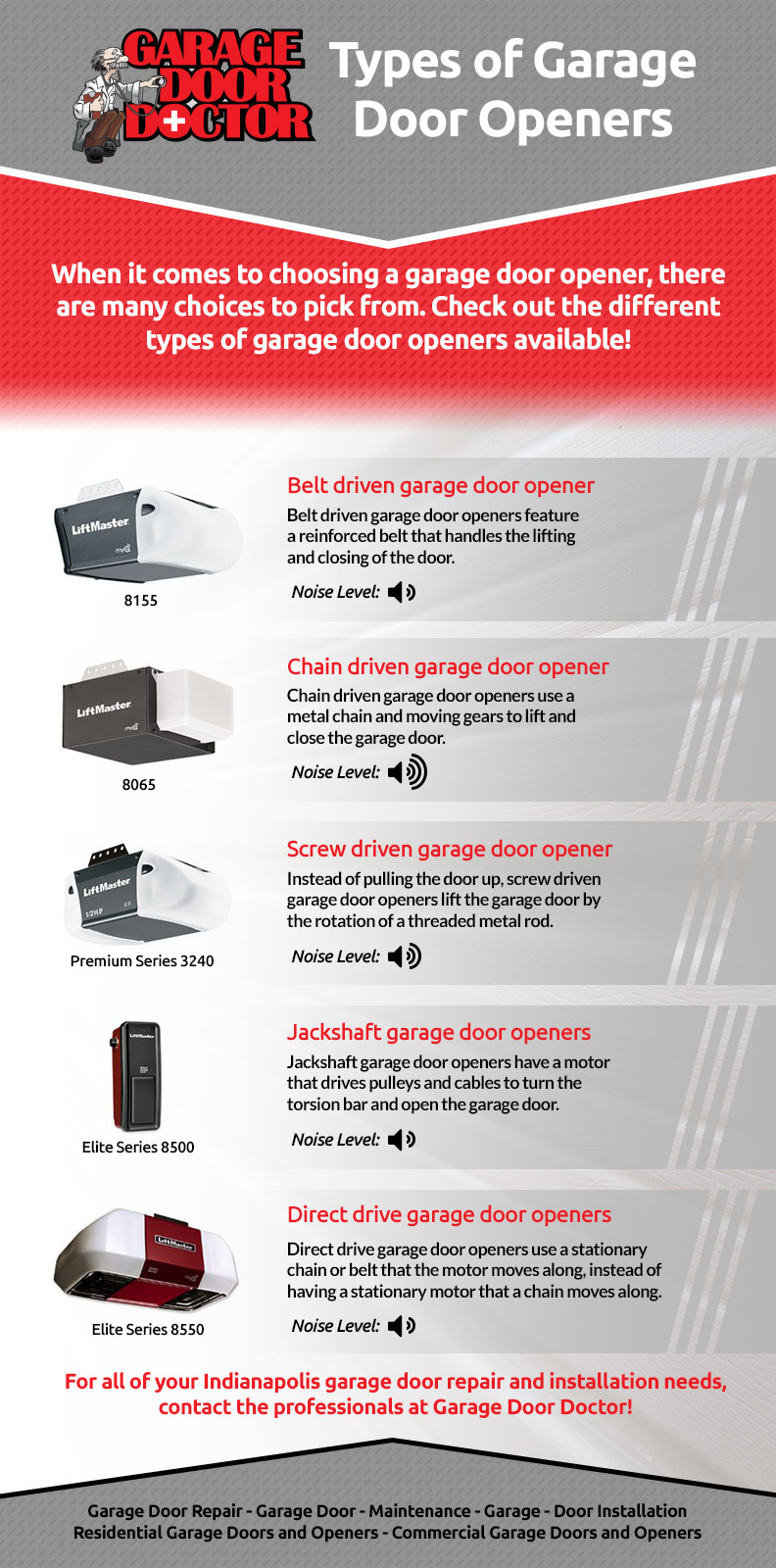
Belt driven garage door opener

Belt driven garage door openers are perhaps the most popular residential garage door opener. Belt driven openers brought in new technology that has been seen in garage door openers, and there is no sign of the technology slowing down anytime soon. In fact, it was the belt driven doors that enabled us to wirelessly control our garage door openers from anywhere just by simply using our smartphones or laptops. They also introduced self-adjusting limits, reliable lifetime warranties on major drive components, automatic closing features, and so much more. Belt driven garage door openers feature a reinforced belt that handles the lifting of the door. These belts can be made from a variety of material, like polyurethane, steel-reinforced rubber, and fiberglass.

A main reason that belt driven garage door openers have become so popular is due to the decreased noise. Garage door openers are notorious for being noisy, but the belts allow for a quieter and smoother close. Plus, the belt driven openers have significantly less vibration than other openers. If a living space is adjacent or above your garage, you will not have to worry about belt driven doors disturbing you. Although they are a bit more expensive than other residential garage door openers, they are a great choice for homeowners.

Garage Door Doctor Tip: A belt driven garage door opener will not magically eliminate noise and vibration if you have an older garage door. If noise is a problem with your garage door, we recommend contacting a professional garage door company to inspect your current setup.

Chain driven garage door opener

Chain driven garage door openers are also a popular opener option due to their cheaper components and simpler construction. Chain openers were the original form of garage door openers, but have come a long way since then. Once the garage door opener became a trend, many homeowners began using their garages as much as — if not more than — their front doors. Although they are a simple design, the chain driven openers reliability has kept it around. Because the system uses a metal chain to lift and lower the door, a chain driven opener is the best way to ensure you have the power to easily open and close your garage door, especially if it is a heavier type. On the downside, since this style relies on a chain to push or pull the door along the tracks it tends to be much noisier than other types of openers. These openers are affordable and reliable, but the level of noise make them a better option for detached garages, where the noise won’t be as disturbing.

Screw driven garage door opener

The once popular screw driven garage door opener has already had its prime years. For about 20 years, these openers were the best available option for garage door openers. These were the systems that made the — then new — features so popular, like battery backup systems, safety sensors, and electronic force and limit settings. Instead of pulling the door up, like the chain and belt models do, these openers lift the garage door by the rotation of a threaded metal rod. Screw driven openers have been known to be offer reliability as they contain far less moving parts, which decreases the chances of breaking down. These openers do require some maintenance and care from time to time, but if you meet the maintenance requirements, screw driven openers will last for years. Plus, screw driven openers can generally lift a door twice the speed of a belt or chain opener. As far as noise, these openers are louder than belt garage door opener but much quieter than chain driven ones.

Jackshaft garage door openers

Jackshaft openers have recently gained some popularity and there are plenty of reasons that are making them a more appealing option for residential garage doors. Most garage door openers as we know them are mounted on the garage ceiling. But with jackshaft openers, they are mounted on the call right next to the garage door. Perhaps the biggest advantage of these openers is the increased amount of security. Since the opener is mounted so closely to the door, most models feature a deadbolt that activates automatically when the door is shut. This feature makes it far more difficult for thieves and burglars to enter your home through the garage door. These openers have a motor that drives pulleys and cables to turn the torsion bar and open the garage door. And if you are someone who is tech savvy, these garage doors have some of the most robust on-board computerization. Because jackshaft openers feature some of the latest technology and incorporate a lot of on-board computerization, they tend to be pricier than other styles of residential garage door openers.

Garage Door Doctor Tip: Jackshaft panels are no for single panel doors and can only be used on sectional garage doors. If you are unsure if a jackshaft opener is right for you, contact your local garage door service.

Direct drive garage door openers

Don’t get confused when it comes to direct drive garage openers. Originally, garage door openers that did not feature a chain or belt were separated into the direct drive category. However, in the recent years, a new style of residential garage door openers have launched and claimed the name ‘direct drive’ and is far different than most garage door openers that are available in today’s market. These openers can either feature a chain or a belt, but when compared to a chain driven garage door opener, the direct-drive uses a stationary chain that the motor moves along as opposed to a stationary motor that moves the chain. This unique change makes direct-drive openers extremely quiet during operation. Some customers have even stated that they are quieter than belt driven garage door openers. Plus, these models are very reliable and durable as the only moving part is the motor. Although these openers are more popular overseas, it will not be before long that they fill the shelves at hardware and home improvement stores.

Find Garage Door Opener Installation Service

Now that you know the different types of openers, you’re ready to pick which one is best for your home. One of the most important things when choosing a garageA Guide To Garage Door Openers door opener is choosing a professional and reliable garage door opener installation company. Your garage door opener will perform correctly as long as it is installed correctly. Because of this, it important to find a leading garage door company to install your new opener. If you live in Indianapolis or the surrounding areas, there is no better choice for garage door opener installation than Garage Door Doctor! Contact the Indianapolis garage door installation professionals today and set up a free consultation! You can count on us for all of your garage door repair and installation needs.